Holding the Line with Love

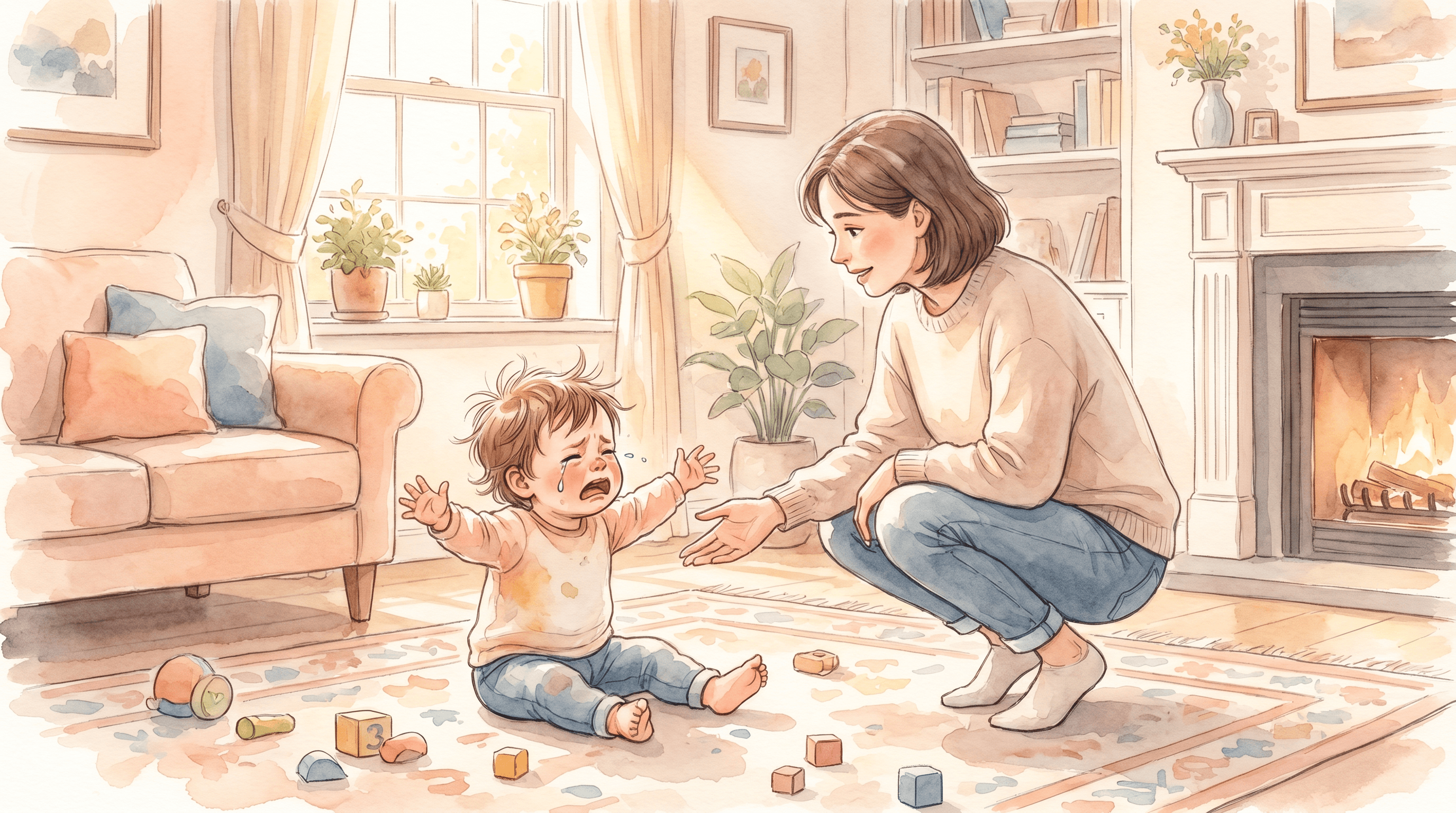
If that sounds like you, take a slow breath. You are not alone. And you are doing better than you think.
Setting limits with little ones isn't about being strict or being permissive. It's about being steady. It's the quiet practice of saying, "I see you. I love you. And this isn't okay."
Limits aren't punishments. They're more like the soft walls of a safe room. They keep your child from getting hurt. They keep others from getting hurt. They give your child a sense of what to expect from the world.
A two-year-old who hears, "I won't let you hit. Hitting hurts," is learning two things at once. They're learning that hitting isn't allowed. They're also learning that you are big enough, calm enough, and steady enough to hold the line.
That feels safe to a small person. Even when they cry about it.
You don't have to be loud to be clear. In fact, the calmer your voice, the more your "no" tends to land.
Try short, kind sentences. "I can't let you do that." "It's not safe." "We're done now."
You can say no and still love them out loud at the same time. "I know you're upset. I love you. We're still leaving the park."
Both things are true. Both things matter.
A meltdown is not your child being bad. A meltdown is a young brain that has run out of room. Their feelings are bigger than they can hold. So they spill over.
Your job in those moments isn't to fix the feeling. It isn't to talk them out of it. It isn't to pile on lessons.
Your job is to stay close. To be a calm shore while the wave passes. Sometimes that looks like sitting nearby. Sometimes it looks like holding them. Sometimes it looks like quiet humming.
The lesson can come later, after the storm. When their brain is online again, you can talk softly about what happened. That's when learning sticks.
You will lose your patience. You will raise your voice. You will say something you wish you hadn't.
This is not failure. This is being human.
What matters is what comes next. Going back to your child and saying, "I'm sorry I yelled. That wasn't your fault. I love you," teaches them something powerful. It teaches them that grown-ups make mistakes too. It teaches them that love repairs things. It teaches them how to say sorry one day.
That's a gift.
In all the talk about gentle parenting, something gets lost. You are also a person in this house. Your needs matter. Your tired body matters. Your full heart matters.
Gentle limits work both ways. It's okay to say, "Mommy needs five minutes." It's okay to put on a show so you can drink your coffee while it's still warm. It's okay to ask for help.
A parent who takes care of themselves isn't doing less. They're modeling something every child needs to learn.
Your little one doesn't need a perfect parent. They need a real one. Steady, warm, honest, and willing to keep showing up.
You're already doing that. The fact that you care this much is proof.
The pasta is on the floor again. You take a breath. You bend down. You say, "Food stays on the table. We're all done."
You meant it. They felt it. That's enough for today.