When Your Child Lies About Something Small

Why Children Lie
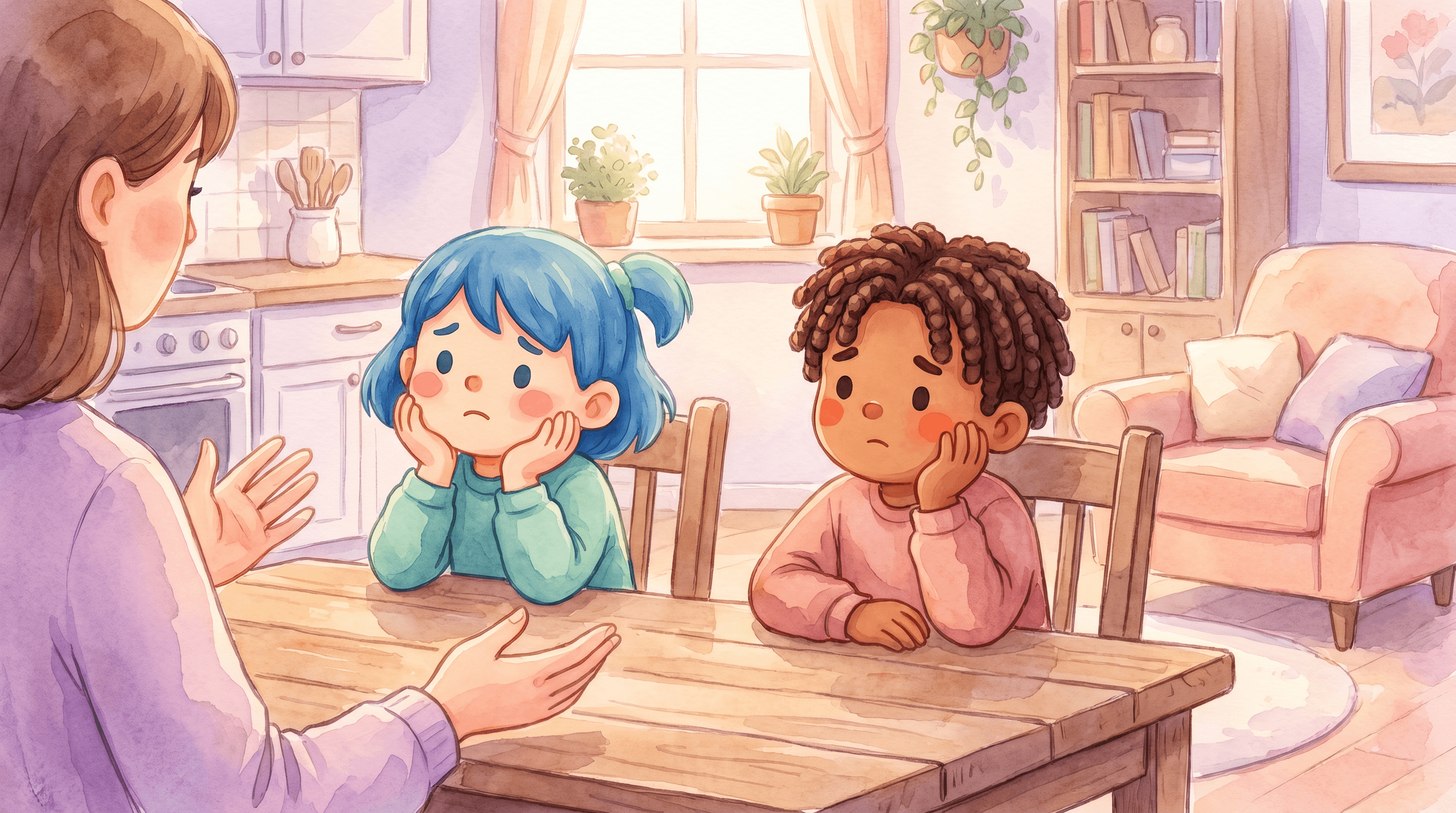
Small lies are a normal part of child development. Children lie to avoid trouble, to test boundaries, to protect someone's feelings, or because the truth feels too hard to say.
That does not mean you ignore it. It means you respond in a way that teaches honesty rather than punishes it.
What You Can Say
"I think what really happened might be different. Want to try again? I won't be mad."
"It's always better to tell me the truth, even if it's hard. I can handle it."
This makes honesty feel safe. If the only outcome of telling the truth is punishment, a child learns to hide things better — not to be more honest.
What to Try
When your child tells the truth about something hard, acknowledge it: "Thank you for being honest with me. That was brave."
You can still address the behavior, but separate the lie from the original mistake. The lie is about trust. The mistake is about learning.
When to Be Concerned
If lying becomes frequent, elaborate, or seems driven by fear, it may be worth exploring what your child is afraid of. Sometimes persistent lying is a signal that a child does not feel safe telling the truth.