When Your Child Says, “I Don’t Want to Go to School”

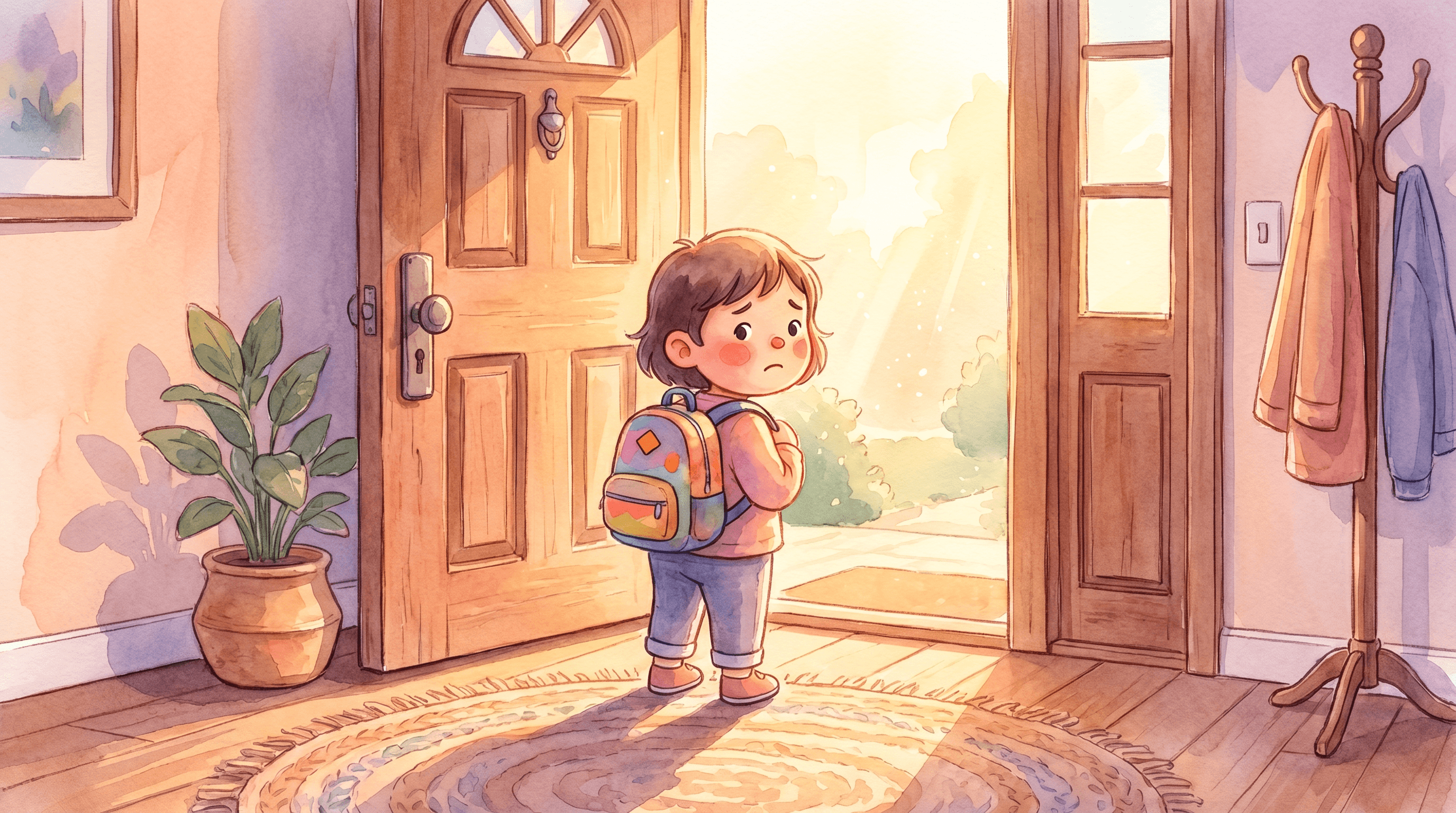
Some mornings, your child may say: “I don’t want to go to school.” This can mean a lot of things. They may be tired. They may feel worried. They may be upset about a friend, a teacher, a test, or something they cannot explain yet.
The goal is not to argue right away. The goal is to listen, check for real concerns, and still guide the morning forward.

What might be happening
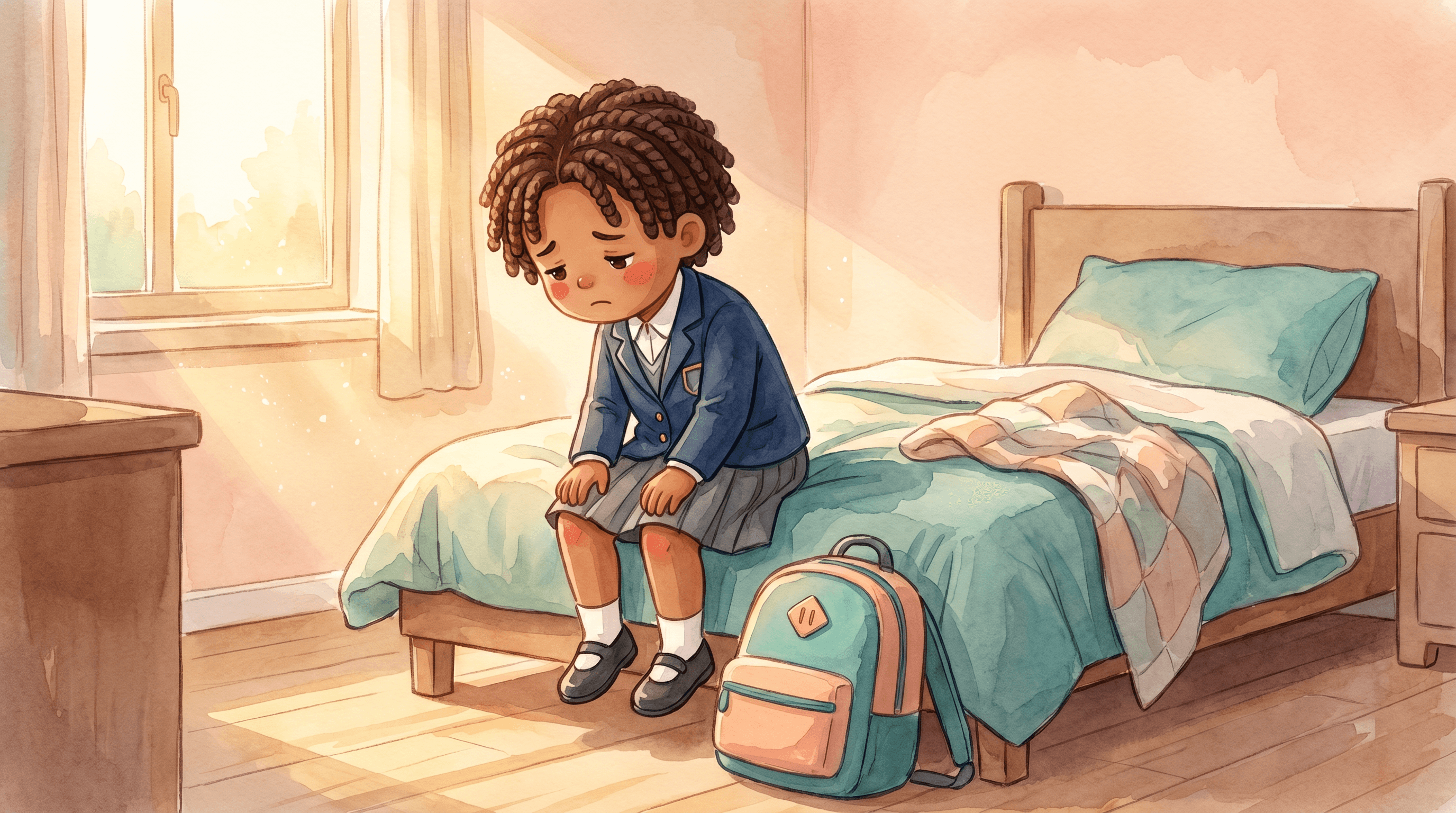
Your child may be:
- tired from not enough sleep
- nervous about school
- avoiding a test or assignment
- having trouble with a friend
- missing you
- feeling sick
- overwhelmed by the morning rush
children experience school avoidance
School refusal isn't always about defiance. It is frequently linked to underlying anxiety, overwhelming routines, or social struggles.
What you can say
Try these phrases:
- “I hear you. You really don’t want to go today.”
- “Is something making school feel hard this morning?”
- “Are you feeling sick, nervous, or just tired?”
- “We’re going to figure out what’s going on, but school is still the plan right now.”
This keeps the tone calm but clear.
What to try
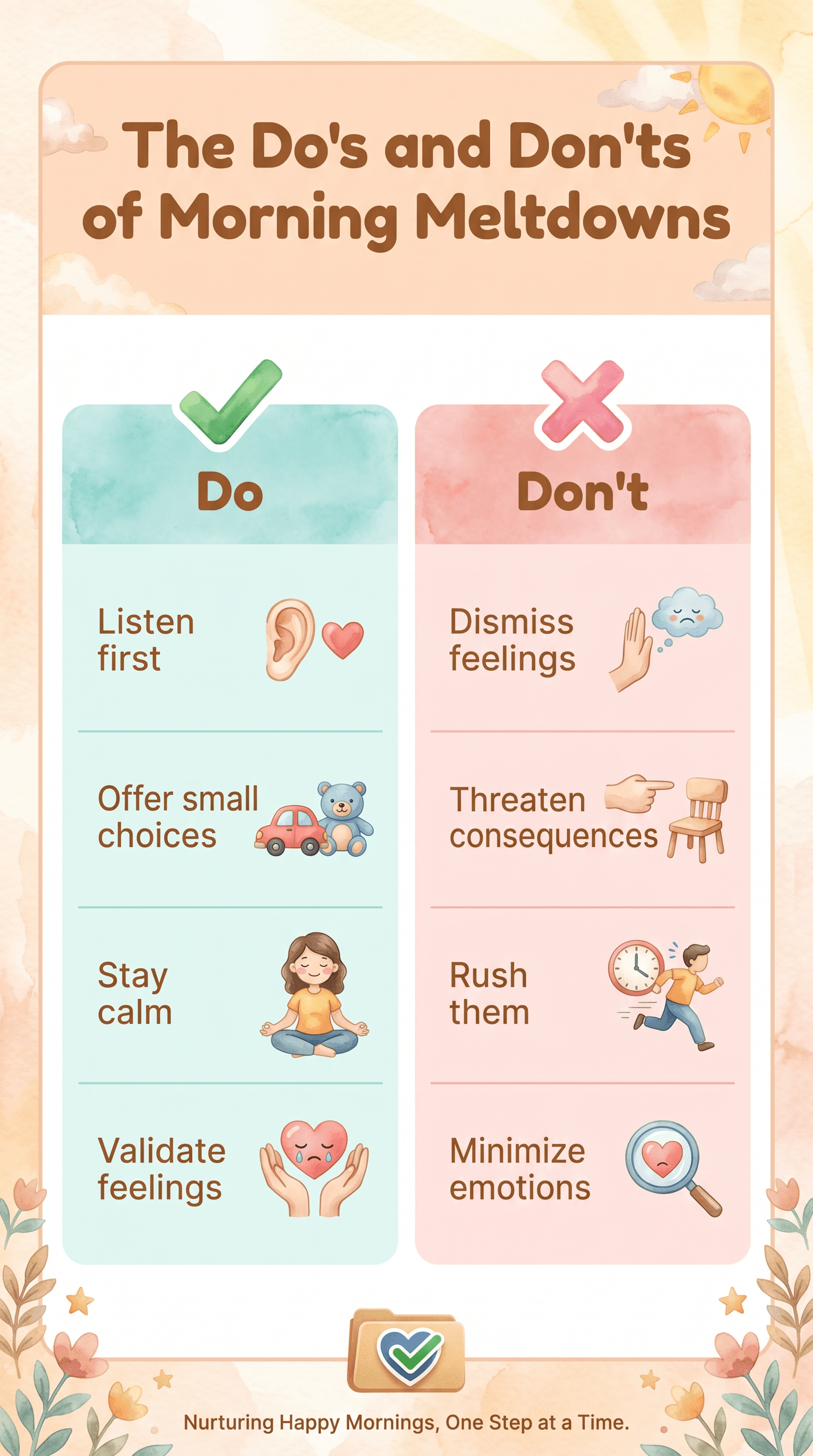
- Give them two calm minutes to explain.
- Ask one simple question at a time.
- Check for sickness.
- Keep the routine moving.
- Offer a small choice. Example: “Do you want to put your shoes on first, or brush your teeth first?” Small choices can help a child feel less trapped.
What to avoid saying
Try to avoid phrases like:
- “You’re fine.”
- “Stop being dramatic.”
- “You always do this.”
- “I don’t care. Get dressed.”
Even if you are frustrated, these lines can make the child shut down or fight harder.
A firm but loving response
“I understand you don’t want to go. I’m not mad. But school is part of the day. I’ll help you get ready.” That is kind, but still clear.
Connection Before Correction
You can listen without giving in. You can be loving and still have rules. You can care about their feelings and still help them do hard things.