When Your Child Struggles With Losing a Game

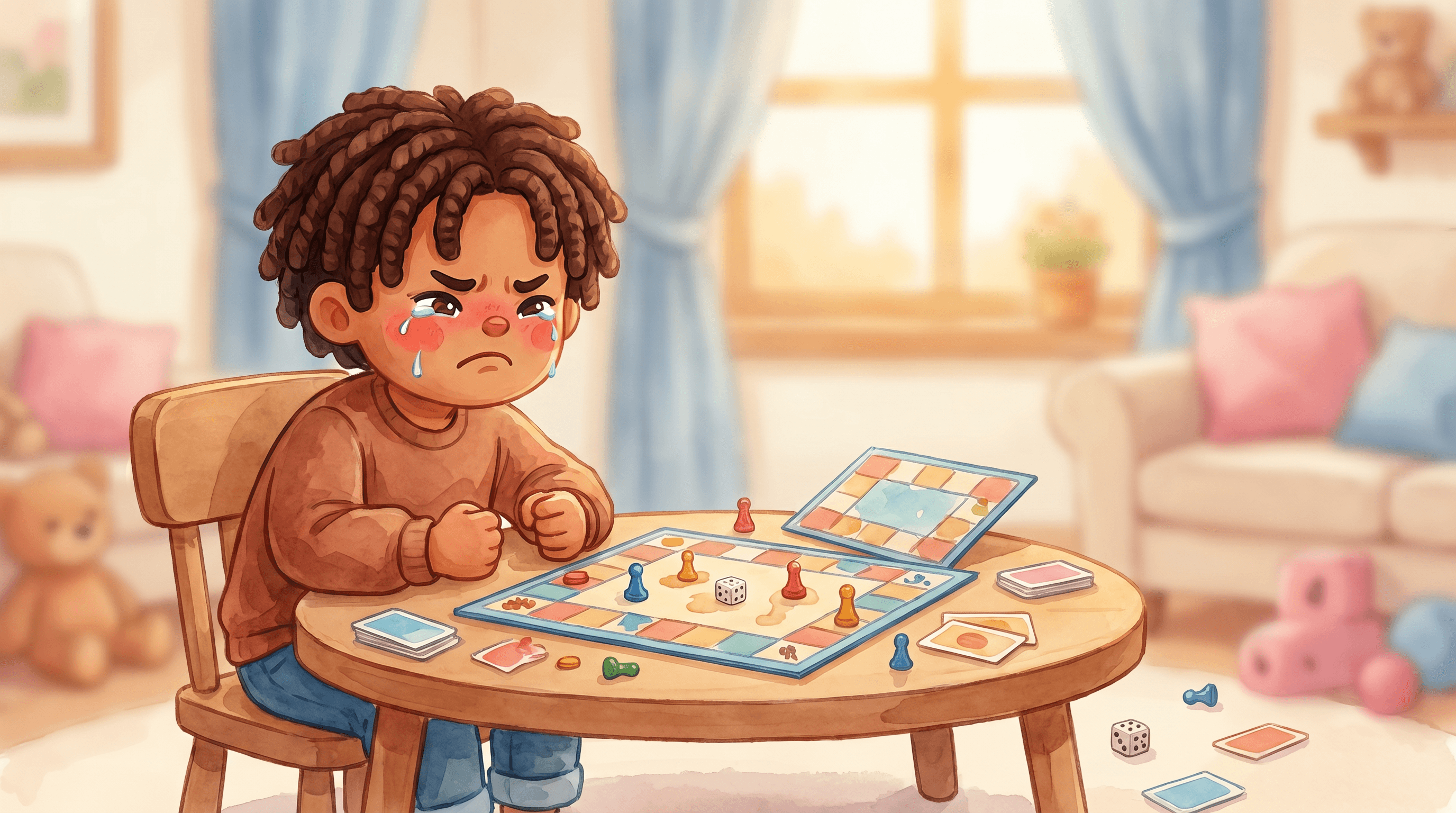
Losing Is Hard
Nobody likes to lose. But for children, losing can feel like the end of the world. They may cry, throw things, accuse others of cheating, or refuse to play again.
This is normal — especially between ages 5 and 10. Children are still developing emotional regulation. Losing triggers frustration, embarrassment, and sometimes shame.
What You Can Say
"I know losing feels bad. It's okay to be disappointed."
"You played hard. That matters more than winning."
"What's one thing you did well?"
Avoid saying "It's just a game." To them, it is not just a game. It is a test of their ability, their worth, their place in the group.
Teaching Sportsmanship
Model it yourself. When you lose a family board game, say: "Good game! You beat me fair and square."
Practice losing in low-stakes situations. Play games at home where winning and losing happen naturally. Praise effort and kindness, not just results.
If It Keeps Happening
If your child consistently cannot handle losing, it may be worth exploring whether perfectionism or anxiety is playing a role. Some children need help understanding that failure is part of learning, not proof of being "bad."